related blog
%20(3).svg)
2
Construction Material Estimator
Estimate materials for your project with our free Construction Material Estimator. Input dimensions and get accurate quantities for concrete, tiles, and more!
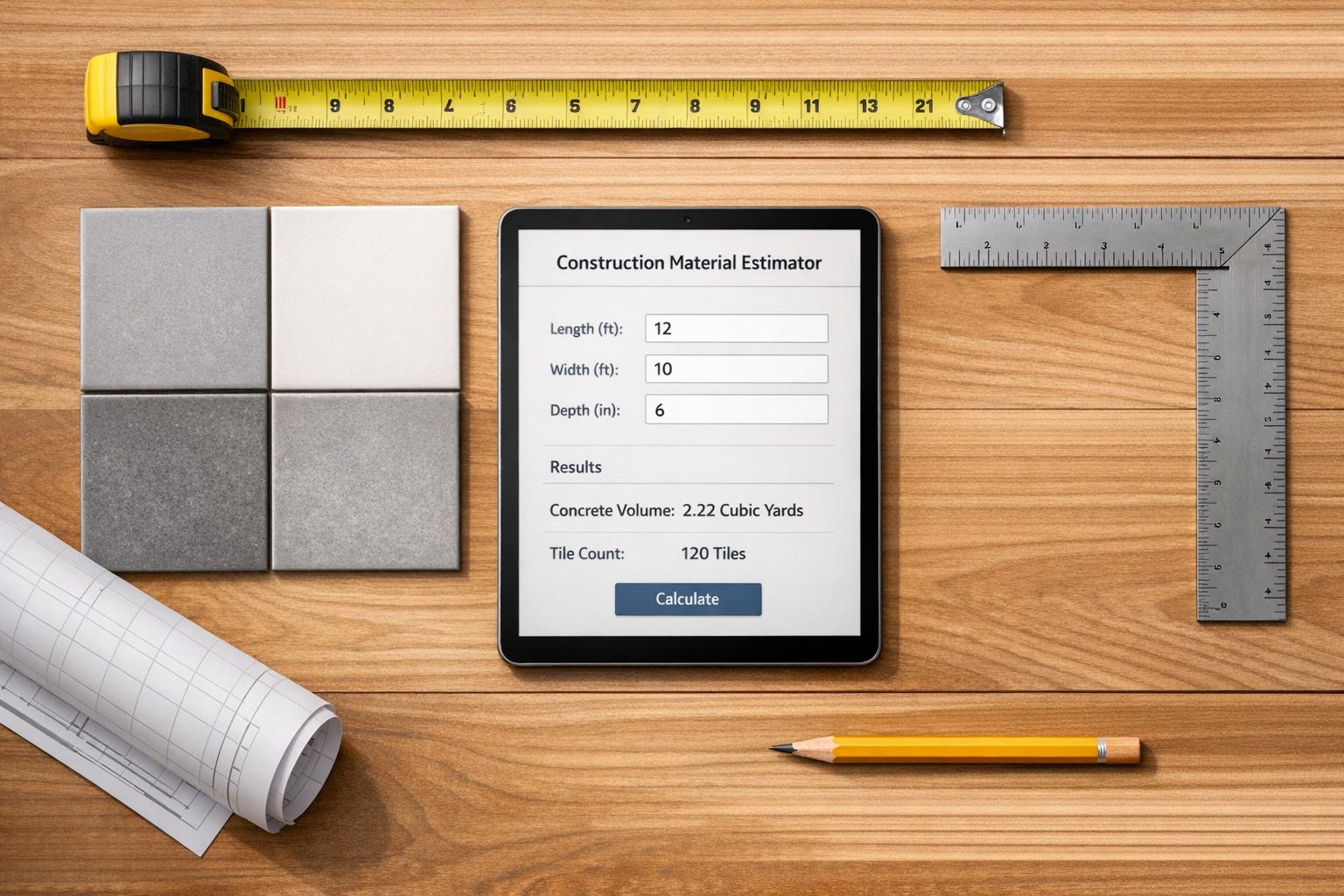
Plan Smarter with a Construction Material Estimator
When embarking on a building project, whether it’s a small home renovation or a larger construction job, one of the biggest challenges is figuring out how much material you’ll need. Overbuying leads to wasted money, while underestimating can stall your work. That’s where a reliable tool for calculating project supplies comes in handy. It simplifies the process, letting you focus on the actual build rather than endless guesswork.
Why Accurate Estimates Matter
Getting the right quantities for concrete, lumber, or tiles isn’t just about convenience—it’s about efficiency. A good building material calculator accounts for dimensions and even adds a buffer for waste, ensuring you’re prepared for the unexpected. For instance, a flooring job might require extra tiles due to cuts around corners or breakage during installation. With precise numbers, you can budget better and avoid multiple trips to the hardware store.
Built for Everyone
Whether you’re a seasoned contractor or a weekend DIY warrior, having a tool to estimate building needs saves time and stress. Input your project details, and let the math handle itself. From walls to roofs, this kind of resource empowers you to tackle any task with confidence.
FAQs
How accurate is this Construction Material Estimator?
Our tool uses standard industry formulas to give you a solid estimate based on the dimensions and materials you input. That said, it’s still an approximation. Site conditions, irregular shapes, or unexpected waste can affect the final amount. We recommend adding a small buffer beyond the calculated waste percentage and consulting with a contractor for critical projects.
Why include a waste percentage in the calculation?
Waste accounts for cuts, breakage, or errors during installation. For example, when laying tiles, you’ll often need to trim pieces to fit edges or corners, and some might crack. A default of 10% is a common starting point, but you can tweak it based on your project’s complexity or your experience level. Better to have a bit extra than to run out mid-job!
Can I use this tool for multiple material types in one project?
Right now, the tool focuses on calculating one material type at a time for a specific project component, like concrete for a slab or tiles for a floor. If your project involves multiple materials, just run separate calculations for each part. We’re working on adding multi-material support in the future, so stay tuned for updates!



See CrewCam in action
Start your free trial now by clicking the button below


Wanna chat or demo?
Questions? Concerns? Requests? Talk to a real human

Watch a CrewCam demo now 😎
Short on time, busy, got jobs to do? See how CrewCam works now!